
This is a quick guide on whether you should buy a radio to fix up. This is not a collector’s guide, just a useful guide for the most common radio types. Unfortunately, this can be an exhaustive list because of the many types of radios and models. This short guide assumes you will either repair or restore the radio. This is not a for-sale guide.
Is fixing vintage radios for you?
Do you enjoy a challenge and learning an unusual skill?
BEFORE WE GET STARTED: DO NOT PLUG IN THE RADIO WITHOUT INSPECTING THE INTERNALS. IT IS TEMPTING, BUT DON’T DO IT!
Why would someone repair one of these old radios? I don’t like talk radio or sports.
Truth is, I don’t like talk radio or sports programs either. I use a small legal-limit AM transmitter that I send audio to. Sometimes it plays old radio programs or music from its era. I also just enjoy fixing broken things. I enjoy the warm light and soft sound of an old radio. I think about all the things the radio may have heard in its lifetime. Maybe it heard President Roosevelt’s Day That Will Live in Infamy” speech. Maybe it heard the first steps on the moon? Or maybe it heard the ‘Shot Heard Round the World from October 3, 1951? I wonder what stories the radios would tell if they could speak
Classic cars may not have the modern features or be as comfortable as a new car, but old radios are like old cars: there is something special about using one. Vintage radios can be rewarding, but they can take some work to get working.
You may look on Facebook Marketplace, local ads, or local hamfests for vintage radios to repair. If you are a beginner, you should start with a simple radio to repair. AA5 radios are cheap, plentiful, and very iconic for the era.
BEFORE WE START, YOU SHOULD RESIST THE URGE TO PLUG IT IN
DO NOT PLUG IT IN!
DO NOT PLUG IT IN!
DO NOT PLUG IT IN!
DO NOT PLUG IT IN!
Just assume the radio does not work. You should open it and inspect it before plugging it in.
First question: Is this radio sentimental?
Was this was grandmas favorite console radio? Was this radio Grandpa’s favorite shop or kitchen radio? Sentimental radios are not something you can buy. Sure, you can replace this radio later, but would it still be the same radio that your great-grandmother used for entertainment and news? There may be better and more capable modern radios, but they are not the same as a radio that means something to you.
Why does matter? Not all radios can be repaired – this is fact of everything that is broken. Some radios would cost more than they are worth. You can not put a price on sentimental pieces.
Second Question: Does it have tubes or transistors?
Most radios made before 1965 were tube radios. This does not make them worth more; it means they are different to work on. If you are not comfortable working with high voltage, consider not working on tube electronics.
In general, tube radios are more electrically ‘simple’ than transistor radios. True, they consume more power to operate, but it is generally easier to diagnose issues.
Next question: What is the general condition of the radio?
Is the case intact? Any dials, knobs, or buttons missing? Missing antenna? Obvious electrical damage? Rust/corrosion to the case? Mice damage? Any of these may make the radio more difficult to repair.
Generally, if the radio has water damage, lots of rust, knobs that don’t turn freely, a missing case, a missing antenna backing (AA5 radio), a broken speaker cone, or missing components, you probably should pass. There are lots of fine radios that need a little effort to make running again.
While you are looking at the condition, here are some potential dealbreakers:
Mice damage, mice nest
Missing antenna backing/missing antenna (AA5 radio)
Speaker damaged or missing
Missing transformers
Missing or broken dials
Missing panels or large cracks on the case
Different country power plug (UK or EU plug instead of US)
Here are some that may be fixable
Missing tubes (Most radio tubes are easy to find online)
The dial cord is not connected or is broken
Some light corrosion or rust on the case
Speaker cloth replacement/repair
Radio hum, no sound
Power cord degraded or missing
Missing knobs
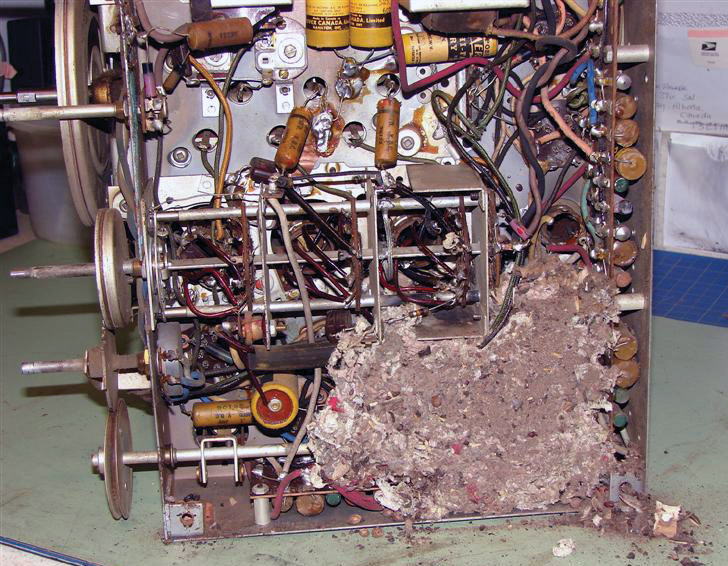
Here is a radio that is not worth repairing. There may be chewed wires, chewed dial cords, potentiometers full of mouse nests, and urine-damaged cases that are can be corroded. Not to mention all the health hazards of what the mice leave behind!
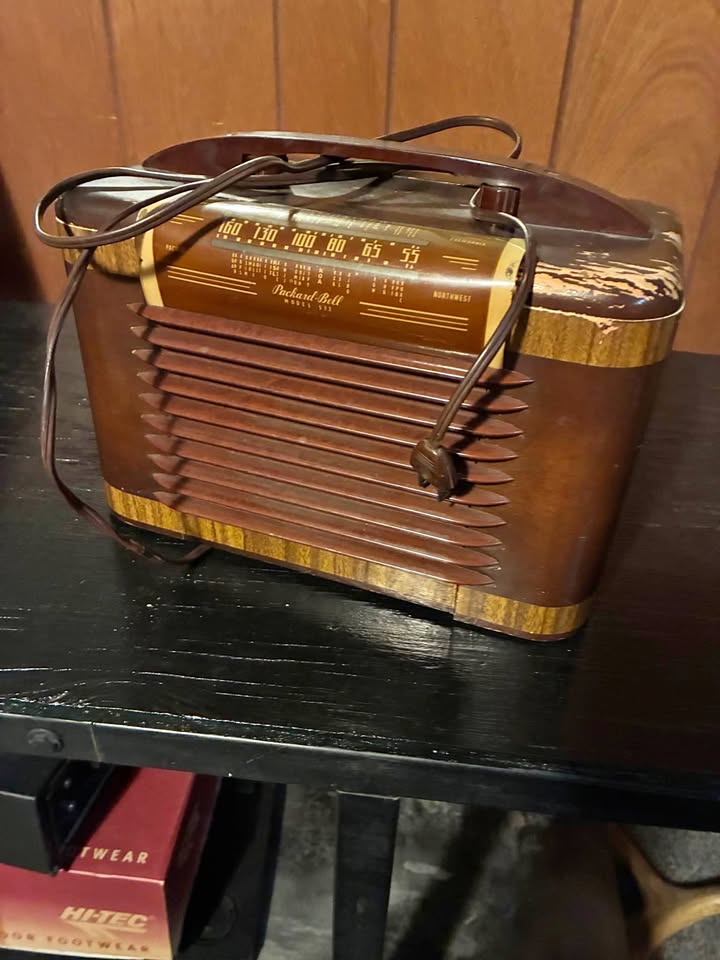
Here is a pretty typical marketplace or attic find. Usually, someone is selling a relative’s stuff, and when they clear the garage or attic, they may find an old radio. The radio may have scuffs and dirt from use and age. This is normal. It will take some elbow grease, but the exterior looks acceptable, and the line cord doesn’t look exploded. So we can assume the electrical inside it should be repairable. This is from Facebook; the seller wanted $30, a fair price for this radio.
DO NOT PLUG IN THE RADIO UNLESS IT HAS BEEN REPAIRED – ASSUME THE CONDITION IS NOT WORKING.
If the condition is poor, it may be better to find a different radio to repair or restore.
Next Question: What is the price?
This is a general price guide, not an exhaustive list.
If the radio is unusual, rare, or iconic, the price could be more. Try not to ship the radio. Most radios are heavy because of tubes and transformers. Local pickup will get the best bargains.
AA5 Tube radio: $20-$40
Console Radio: $50-$100 (may change based on whether it is AM, AM + FM, AM + FM + record player, etc.)
AM/FM Transistor Radio: $10-$20
Amateur transmitter: $50
Amateur/Shortwave receiver: $50
Assuming unrestored*
Restored models will cost more, but we are not focusing on those right now.
Also, remember your time has a price. If you need to do lengthy repairs on a radio (more than capacitors and minor components), consider that a factor in the price.
Next Question: What will it cost to repair the radio?
You don’t need to have an exact amount, but you should have a general price of common components to replace. For AA5 receivers, each tube is a few dollars to replace; the paper and electrolytic capacitors and power cord are common components to replace.
Ham radio transmitters and receivers typically have more capacitors, and their tubes may be difficult to source. Transmitter tubes are typically more expensive than standard tubes.
Vintage ham radios, especially Heathkits, used wafer switches on the front to control the radio. Unfortunately, switching 115V AC with a wafer switch may cause arching and damage the switch. And these switches are ‘unobtanium’. Be aware of this when working on Heathkits and other vintage amateur radios.
Assume these parts to be replaced:
Capacitors (5-10, $1 each)
Other components
Tubes (Can be $5 each for common, much more for rare transmitting tubes)
Line Cord ($3-$5)
Also, you may need some test equipment to test the radio.
In short, expect to invest $10/$20 per radio to fix, but this could be more based on other issues.
Last Question: Ready to make an old radio live again?
Check out the articles below to get started.
Need to find an old radio?
Check out the local hamfests page.
Northwest Vintage Radio Society
Maybe check out this guide: What Tools Do I Need to Fix Old Radios?
Want to bring that old AA5 AM radio back to life?
More info on AA5 Radios