If you plan on working on any vintage equipment, you should have a tube tester. Any amatuer radio equipment newer than ~1980 will have transistors.
What is a tube tester?
Simply: it tests tubes. Tells you if they are ‘good’ or ‘bad’. But you already knew that. There is a lot of science behind testing tubes, and this page will brush on these important concepts. If you do not understand how your tool works, do you know what your tool is telling you?
There are 3 main types of tube testers.
Filament Checkers
Emissions Checkers
Dynamic/Trans-Conductance Checkers
Filament Checker
These were the earliest tube testers and are the simplest. They test for a filament connection and light up. This test can be done with a multimeter, so they are not common and not very useful. All tube testers can do this test and more.
Emissions Checker
Emissions checkers are the most common budget tube testers. They can be found for reasonable prices and are easy to set up. They were common in traveling repairman toolboxes because they were relatively small. They apply a voltage to the filament, then connect the plates and grid, and test the output. You generally get a good/bad reading. Think of this as using the tube like a diode. This does not measure for amplification, just the flow of electrons to the tube output. These are great testers to start with; they will identify obvious bad tubes.
Trans-Conductance Checker (Sometimes called Dynamic)
These are the premium tube testers. When tubes were common, repair shops used these. Traveling repairmen may have had access to one, but rarely carried one. They are LARGE & HEAVY! They often came with a built-in chart for tubes to test. Setting up these was known to be more difficult than emissions testers. These are great tools to have, if you can find and afford one.
Which of these tube testers should I buy?
That is a good question that can not be answered easily. Depending on your needs, budget, and checker availability, this will influence the answer.
Generally, you want something that can test the common tube sockets – Octal, mini 9-pin, mini 7-pin. Most testers will test these tubes. There are other tube sockets, but they are pretty rare, and finding equipment that uses these is also pretty rare.
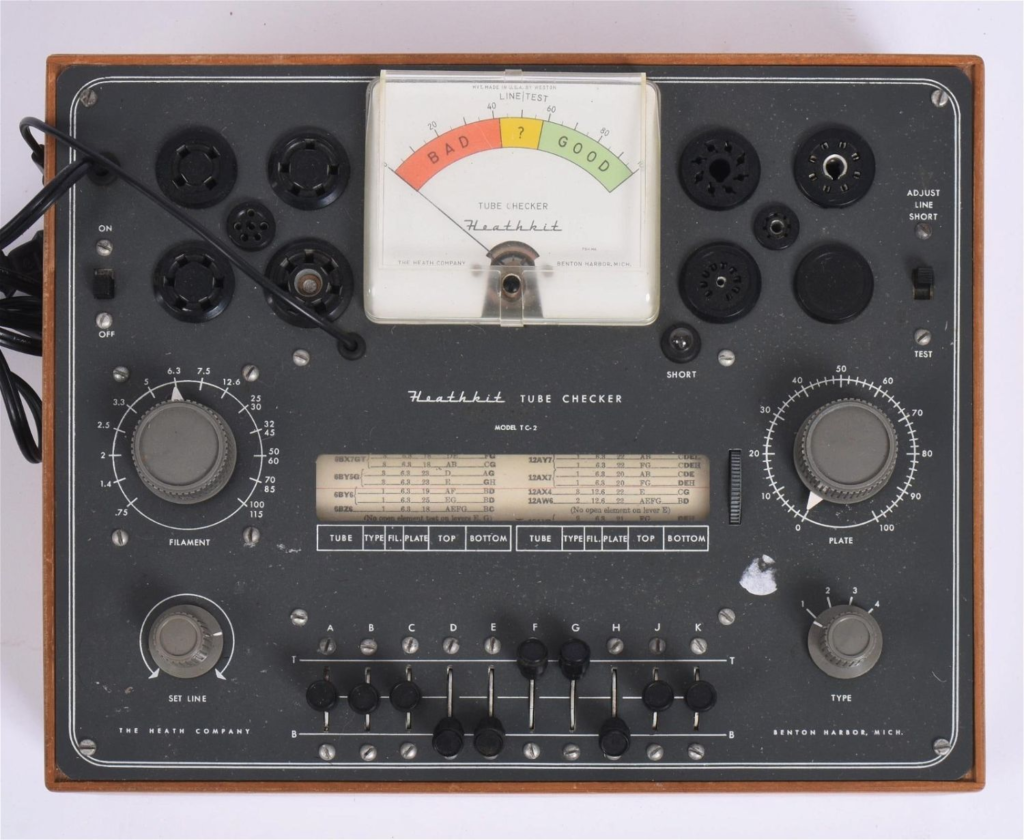
Heathkit TC-1/TC-2, IT-17
Tester Type: Emission
These testers were pretty common in the 1950’s and the heyday of Heathkit. They do a reasonable job and have lots of parts and documentation online. Some of these use a selenium rectifier; be prepared to replace them. Expect to spend between $100 and $250
EICO 667
Tester Type: Trans Conductance
These are pretty underrated tube testers that can be found
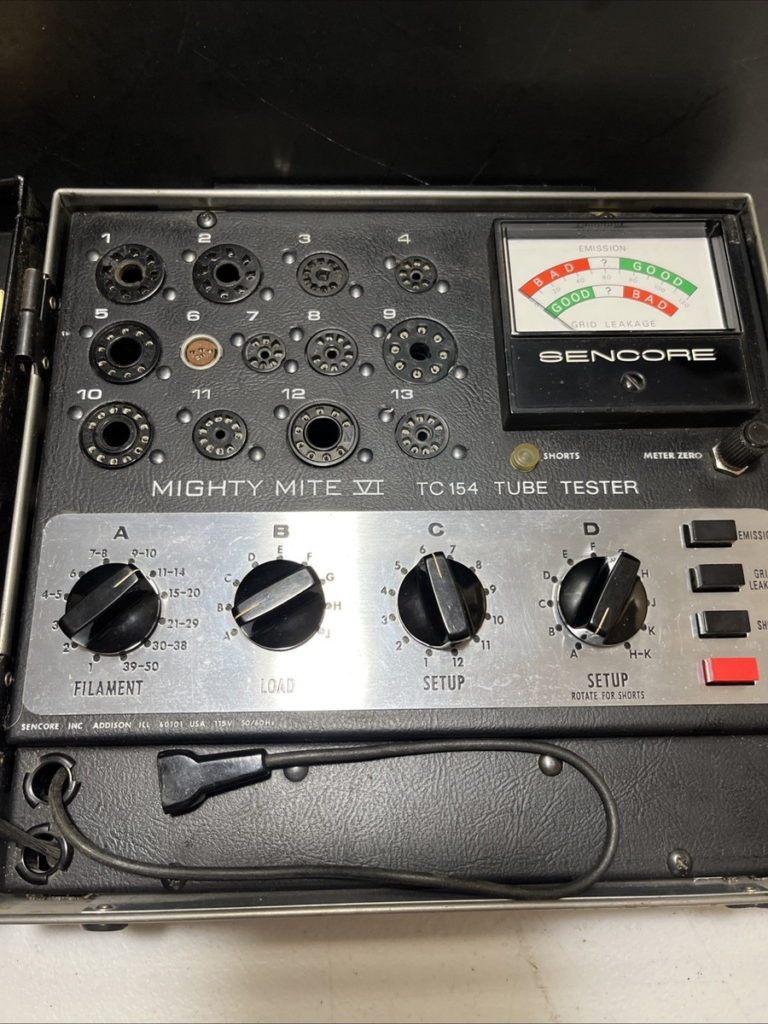
Sencore Mighty Mite Series
Tester Type: Emission
This line of testers is pretty decent and can be found for a reasonable price. I personally had one of these, and it tested most tubes. It was quick and easy. Most of the Mighty Mite line is similar. Newer versions were solid-state and could test transistors. Expect to spend between $100 and $250.
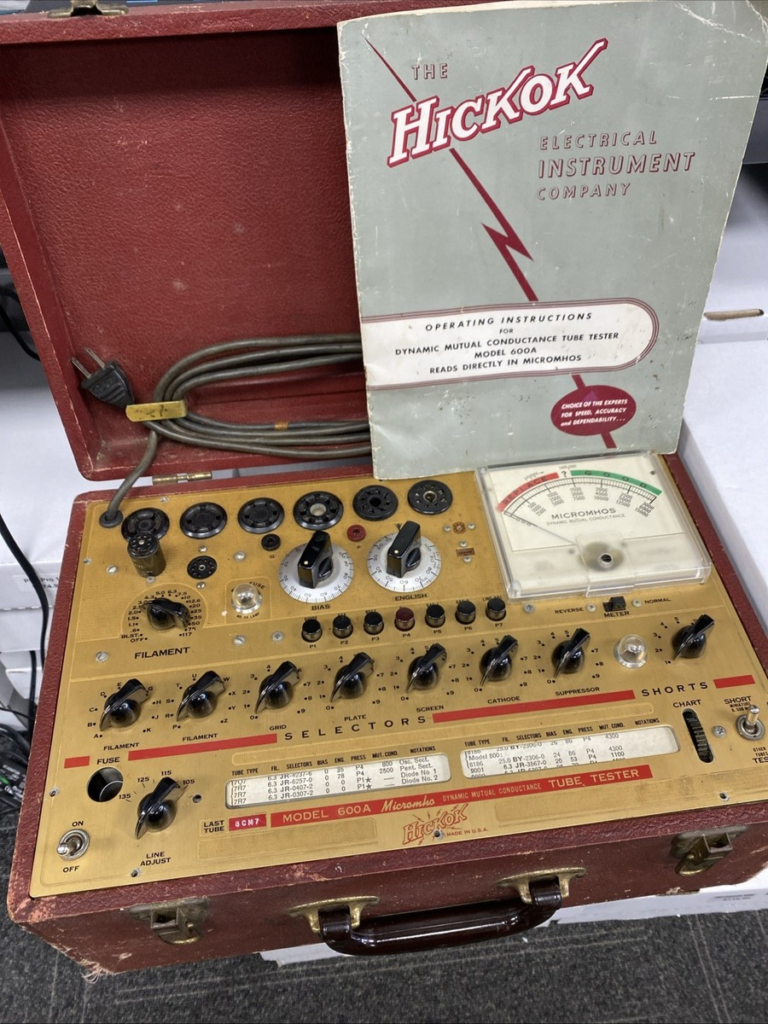
Hickok 600/600a/6000
Tester Type: Trans Conductance
This tester is extremely sought after for its amazing set of features. These are described as technician test sets because of their portable size. There are better testers, but these have almost everything you need. They are also relatively simple to set up. If you need more features, expect to pay the premium price. I personally have a 600, and it is extremely powerful. Expect to spend at least $200.
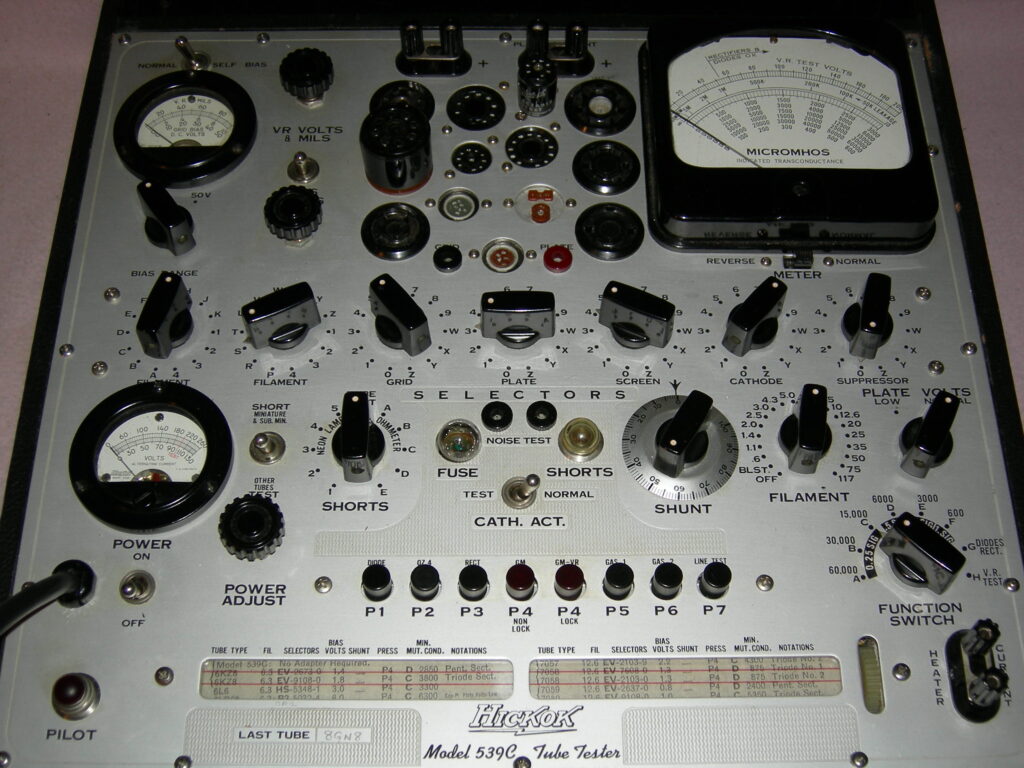
Hickok 539B/C
Tester Type: Trans Conductance
This is said to be one of the best testers ever made. They give more accurate readings than the Hickok 600 series. They are expensive and huge! Not for transport. These are described as lab-grade testers. They are also not easy to set up. Look at all those settings! If you can find one of these for a bargain, it will be a fine test tool in your arsenal. Expect to spend at least $400.
Need some brushing up on vacuum tubes? Try this page: WHAT IS A VACUUM TUBE?