
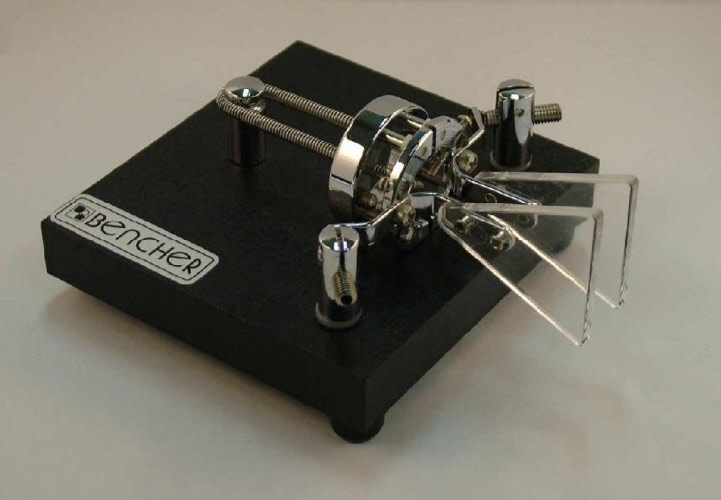
An Iambic paddle is a very common piece of a ham radio shack. It has 2 finger pieces. They are pressed with either the thumb or index finger to generate Morse code.
Nearly every modern radio has a built-in keyer that can generate the code for you.
Which side does shorts/longs?
That depends on what you prefer. Generally, the shorts are on the thumb, and the longs are on the finger.
Why use an Iambic Paddle?
The very slight movement required to paddle is ideal for extended operation. It prevents arm and wrist fatigue. It is also less mentally tiring when the characters have automatic spacing.
For those who are not very good with a straight key, these are consistent, and the spacing can make it easier for other operators to understand.
Generally, speeds above 20 WPM are sent with a computer or a paddle. It is possible to use a straight key at these speeds, but it is uncommon.
How does a paddle connect to a radio?
Before microprocessors became common, radios could not do this function on their own. A separate device called a keyer was needed. These devices are still found today, but are not as common. Some common models were made by Hallicrafters, Heathkit, MFJ, and others.
Today, you may still find radios that do not have a keyer built in – typically QRP, kit radios, and homebrew radios. These need an external keyer. A keyer can be used on a newer radio; just connect the output of the keyer into the straight key port or disable the keyer function in the radio.
Today, most modern radios have a keyer built in. Simply connect your paddle into the keyer port. Most radios use the 3.5MM TRS audio plug. Check your radio manual for specifics on which to wire to tip, ring, and sleeve.
From the radio menu, you can control the speed of the sending. Again, check your radio manual for details.
What are some good paddles?
This is not an exhaustive list, just a few common ones at different price points.
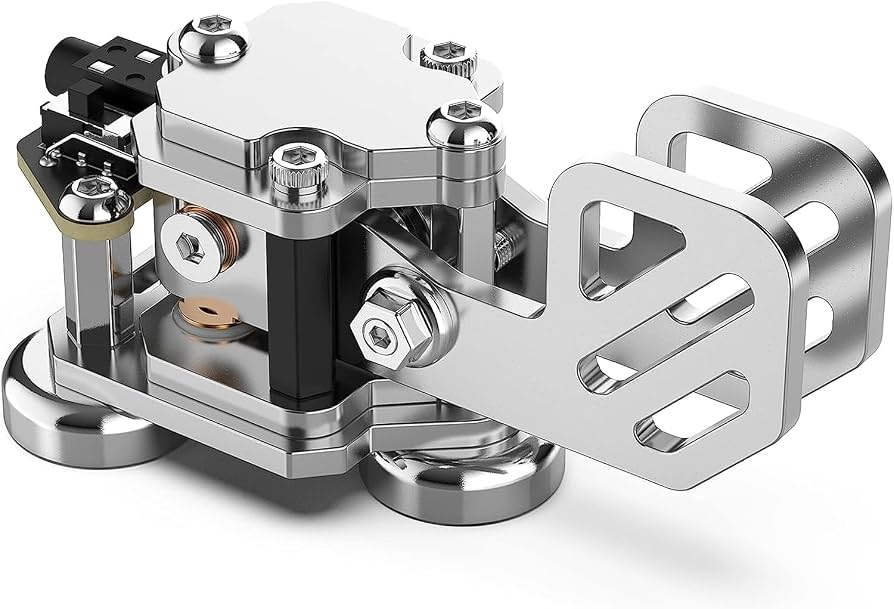
Portable No-Name Steel Paddle – $
These are favorites among portable operators. The keys are made completely from steel. The magnets on the bottom are sturdy and strong. Pretty popular for POTA and lightweight operations. Great for ammo cans and any other steel surface. These keys are very common online and are found with many different names. Just make sure to buy from a reputable seller.
These are commonly found for about $60.
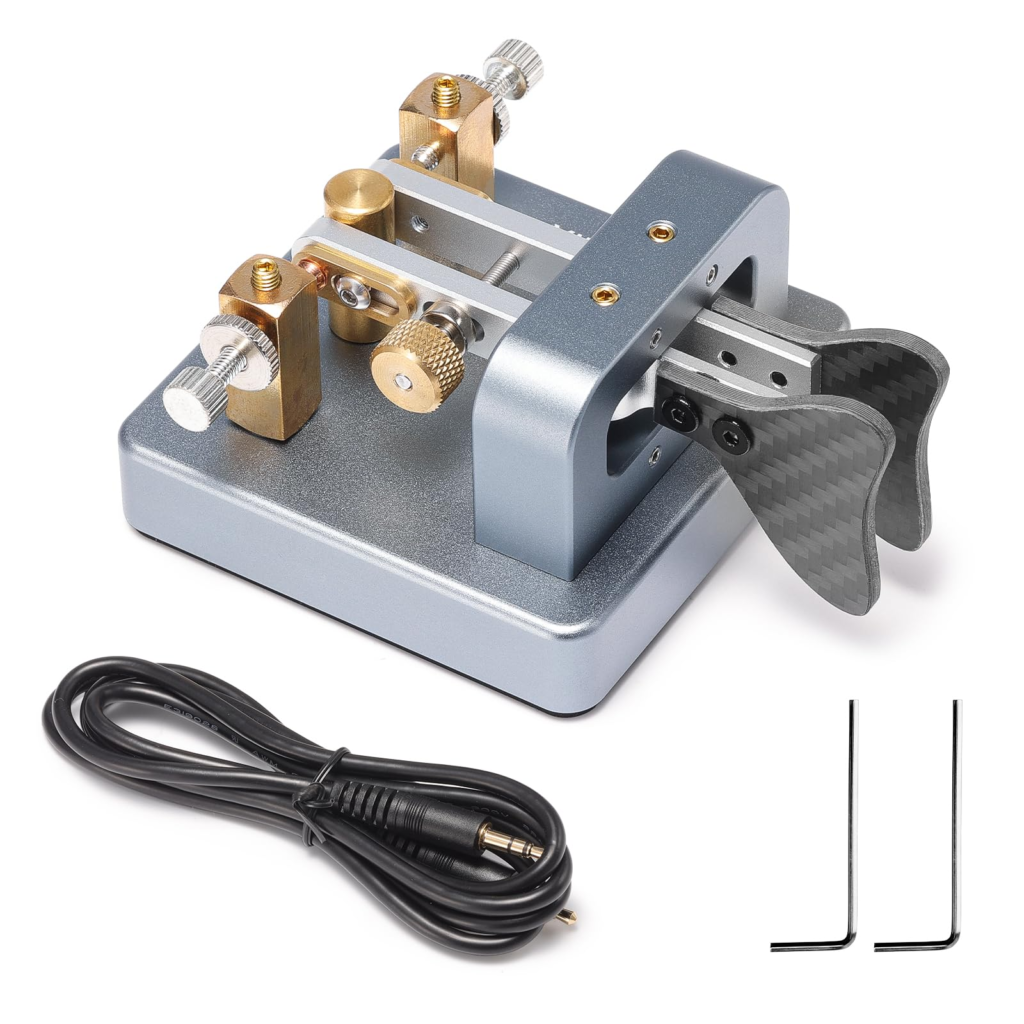
Xiegu VK-6 – $
Xiegu is a newcomer to the radio space. These are a neat budget option. They have magnets on the bottom so you can attach them to a sturdy base. These also come with many other brand names, but the key is the same. I have one of these, and it is adequate and precise for normal operation. You can find these on Amazon or AliExpress for $90-$100.
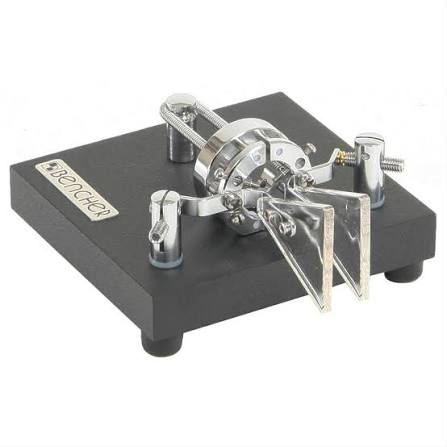
Bencher BY Series – $$
These are often a first key for most CW operators. My first paddle was a Bencher; I have used them at field days. They are relatively cheap and work well for most operators. They are not as exquisite in quality as the other keys listed, but are fine keys for the right price. These keys can be found new for about $180. Used for $75-$125. They are also pretty common at hamfests.
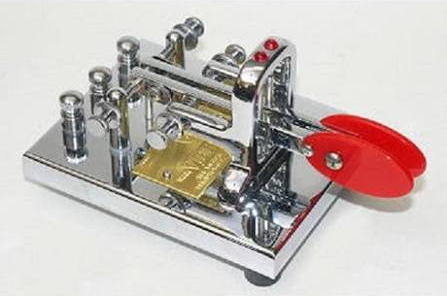
Vibroplex – $$
Vibroplex is an old manufacturer of morse code devices. They are best known for their bugs, but you will often find Vibroplex paddles and straight keys. These are all high quality. My first teacher used only Vibroplex keys on the air. These keys start at about $150 and go up to $350, depending on the model.
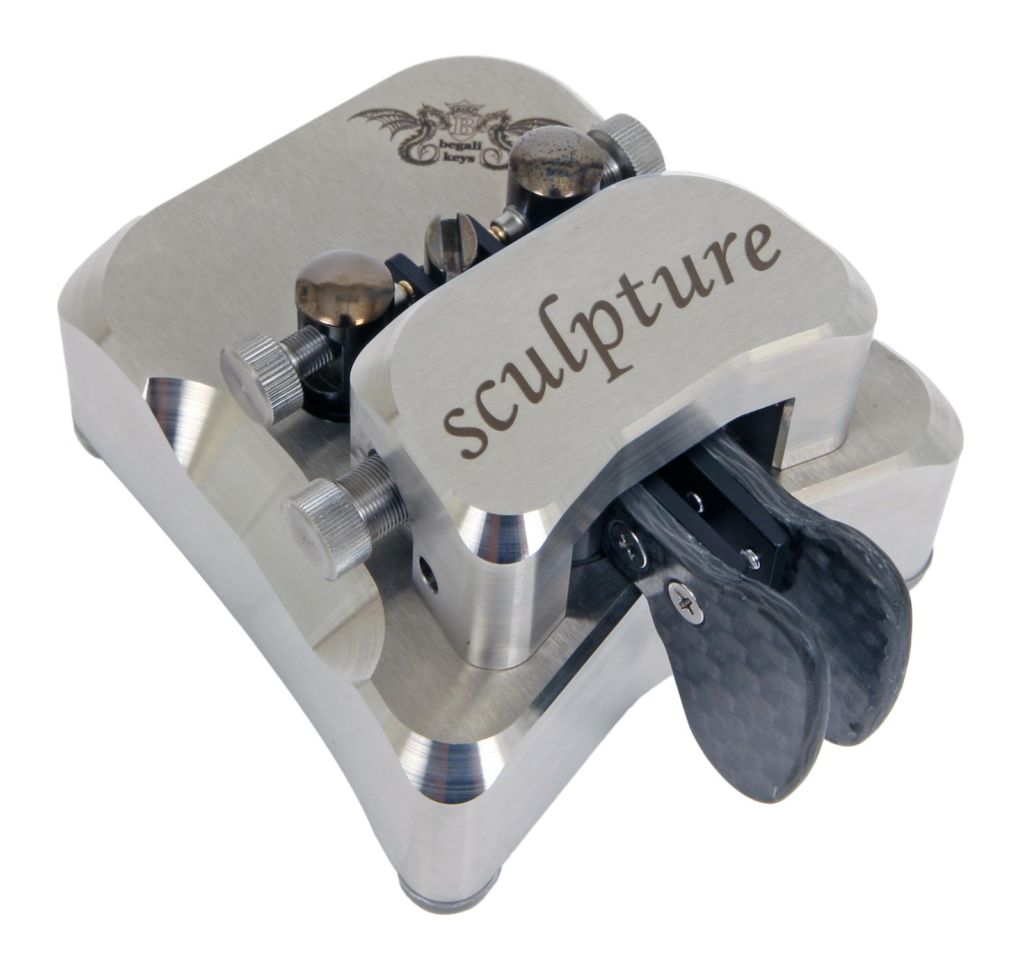
Begali – $$$
Begali is an Italian family that makes some of the finest handmade keys. You will often find these on contestors and dx teams. These are works of art as well as a piece of functioning gear. Everyone Begali user I have spoken to says they will not use any other key.
These keys can be $250-$600.
N3ZN – $$$
N3ZN keys are high-quality precision keys made in the USA. These cost between $300 and $400. These are popular among contesters and serious CW operators.