What is a Radio log?
A radio log is a list of all the call signs that you have contacted on the radio. It has details such as callsign, frequency, date, time (typically UTC), signal report, and mode.
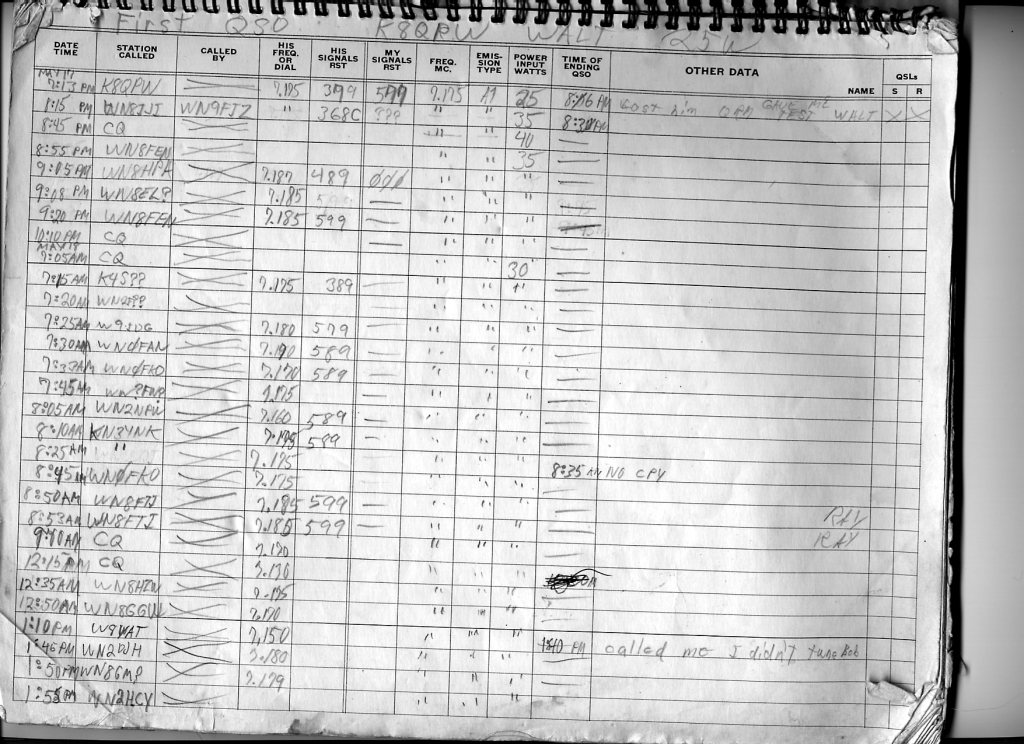
Here is a paper log sheet. In the past, they used to log every ‘CQ session’, even if no contacts were made. A1 mode is the technical name for CW. Read more about that here: https://en.wikipedia.org/wiki/Types_of_radio_emissions
Do I need to keep a log?
In the past, it was required to document all transmissions, including contacts made on the radio. Today, this is no longer a requirement. It is still a good idea to keep a log for all the reasons below.
Ham radio awards are easier to apply for if you keep a log. You can also track award progress via your logger
QSL cards are not as common as they once were, but in case you want to send or receive any, they help with filling out QSL cards.
Old logs used to be logbooks. Today, paper logbooks are not as common; most use logging software. Here are some popular logging programs.
N3FJP – $40 Logger, OR $60 Logger + Contesting Logs
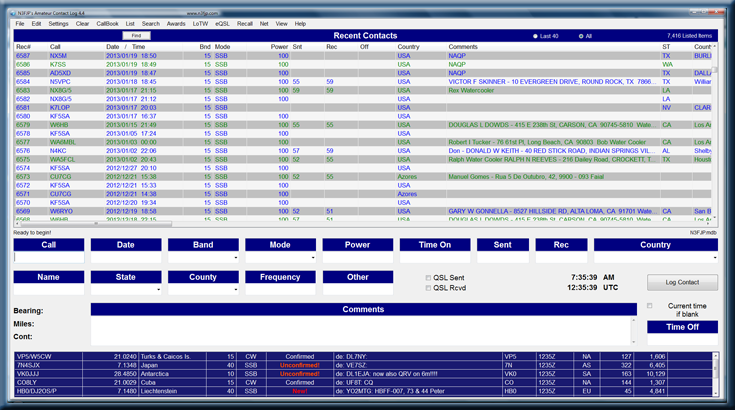
A very popular software suite for everyday logging. You can get the base logging software or the full suite with all the contest modules. At $60, it is a fantastic deal. Most digital software can integrate directly, making logging seamless for digital operations. It also connects to your radio and can auto-populate the frequency, band, and mode.
Disclaimer: I personally use this, and so far, I do not have any complaints. It is very intuitive. You can also customize it, but I don’t feel that desire.
The list of features is too long to list here, but most operators would be happy with the features included.
LOG4OM – Free
Ham Radio Deluxe – $100, extra support past 1 year costs extra
Ham Radio Deluxe is a premium option that is more than a logger. It also controls antenna rotors, auto tracks satellites, built in digital modes (PSK31, RTTY, etc.). Since these parts are in the program, you don’t need to configure multiple programs to talk to each other. It simplifies radio operation.
N1MM – Free
N1MM is a little different than the others. It is designed to be a contesting log. It is jam-packed with features for contesters – point calculators, CW keyers, WSJTx full integration, etc.
It does have a steep learning curve and a tedious setup process, especially if there is going to be a network with multiple loggers (such as for field day).
HAMRS – Free
HAMRS is a newcomer to the logging scene. It was originally popular with portable operators. It doesn’t have as many features as N3FJP or Ham Radio Deluxe, but it is meant to be lean for portable use. Many use it portably and then export the ADIF to their daily logger. It is also the only logger on this list that runs on most major platforms (Windows, MAC, Linux, Android, iOS).
Can I still use a paper logbook?
Sure! There are lots of operators who still use a paper log. A small notebook is much lighter than a laptop, and weight is a huge factor for portable operations. They typically enter the info after they get back to their computers. Think of it as a temporary place to store contacts. Here is a log sheet you can print out that will make it easier:
Most hams appreciate a confirmation for their contacts – especially award hunters. So it is recommended to use an electronic logger so you can upload your contacts for confirmations.
Where do I upload ham radio logs for confirmations and awards? Try this page: Which should I use? LOTW, QRZ, eQSL, or Clublog?
If you want to confirm using QSL cards, visit this page: What are QSL Cards?