
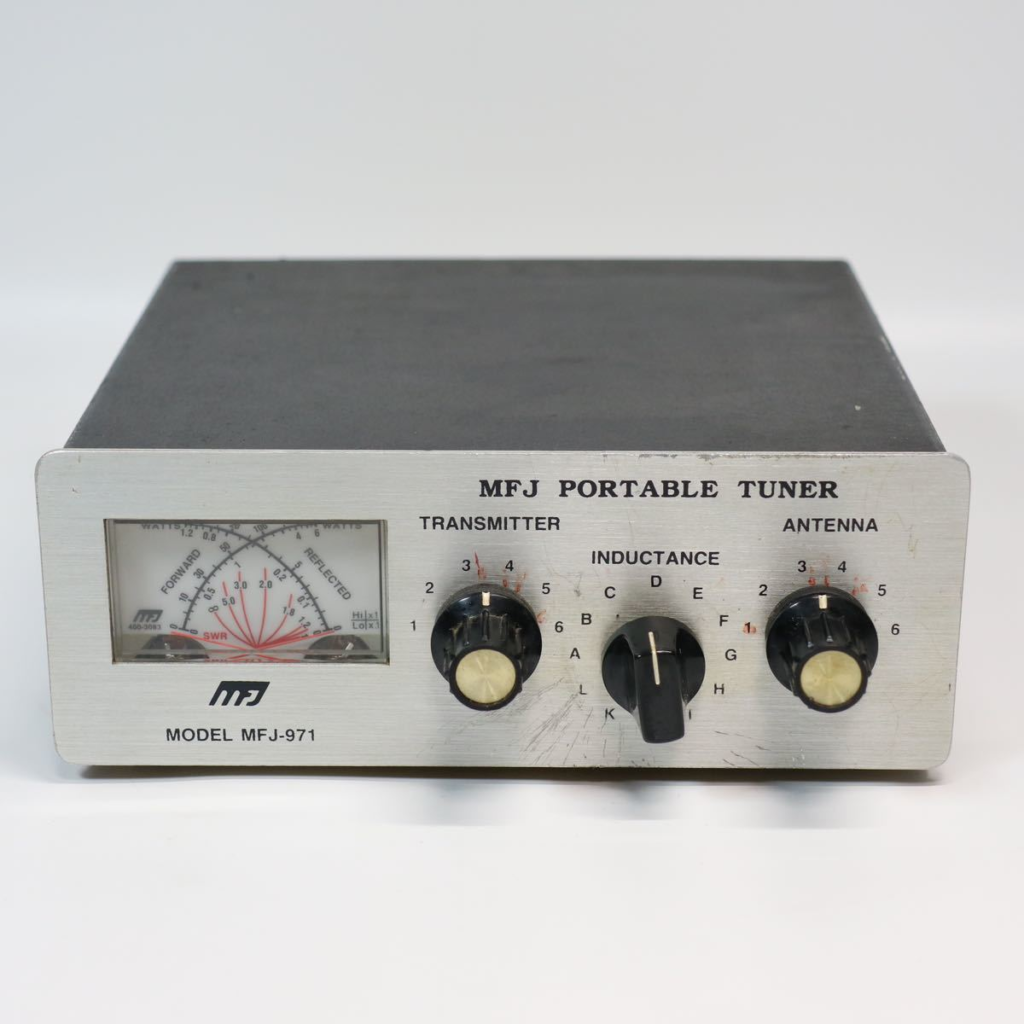
An antenna tuner or antenna transmatch is a way to match the impedance of an antenna and feedline system to 50 ohms, which is expected by the transmitter.
An antenna tuner is very common in most amateur radio stations. Most hams use them on multiband antennas or compromise antennas.
Amateur radio transmitters need an impedance of 50 ohms. 50 ohms became the standard because it was a compromise between power handling and efficiency.
What Does a Tuner NOT do?
- It does not make your antenna more efficient
- It does not fix a poor antenna
- It does not reduce losses in a feedline
What is an Antenna Mismatch?
If the antenna and feedline are mismatched, the SWR will be high, and there will be reflected power back to the transmitter.
Some of the RF power will be reflected to the radio. If the mismatch is large, this could damage the transmitter.
Simply, the tuner is to make the transmitter happy by transforming the impedance seen by altering the impedance of the antenna to 50 ohms. The actual antenna impedance does not change. The antenna will not be more efficient.
What is SWR?
Great question! Read more about SWR here: What is SWR And Why Does It Matter?
Inside Antenna Tuners
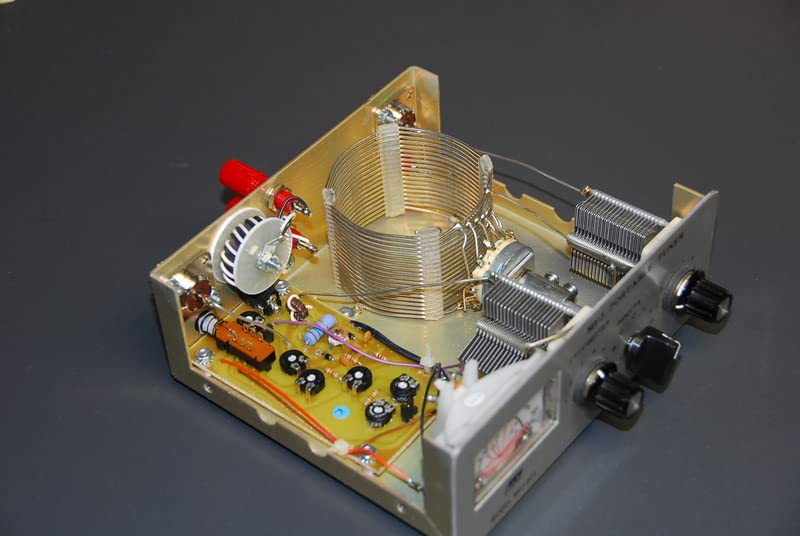
Inside an antenna tuner, you will see 3 main parts:
- Variable Capacitor (Input)
- Inductor
- Variable Capacitor (Output)
In this photo, the inductor is the large vertical coil near the center, and the 2 capacitors are just off to the right. The board on the left controls the meter.
Where Should A Tuner Go in a Radio Setup?
If the tuner is placed in the wrong place, it will not be effective and has the possibility of damaging your radios.
Radio -> SWR Meter/Bridge -> Antenna Tuner -> Antenna Feedline -> Antenna
If you have an amplifier, it should be like this:
Radio -> Amplifier -> SWR Meter/Bridge -> Antenna Tuner -> Antenna Feedline -> Antenna
How do you use a tuner? What’s the easiest way to tune an antenna?
There are a few different types of tuners, but I will focus on the most common type: a tapped inductive coil with 2 variable capacitors, just like the MFJ tuner above.
First, turn your radio to receive an unused frequency and turn up the audio so you hear static. Please don’t tune into another station; that is very distracting and is considered very rude. Tune in to an unused frequency.
Starting with the inductor, change the inductor setting and listen to the static. Make a mental note of the setting with the loudest static. Once you find the setting with the static at its loudest, leave the inductor on that setting. You may also want to write this down for quick tuning later.
Repeat the process for both of the capacitors. Adjust each of the capacitors to the highest noise levels.
This ‘rough tune’ will not be perfect, but will be pretty close.
Set the radio to low power, 5-10 watts is ok. Set the mode to CW or AM – SSB will not send a carrier tone.
Transmit – either hold down the PTT or hold down the straight key, watch the SWR meter, and adjust both variable capacitors until the SWR reads the ‘dip’ (the lowest SWR).
What is a Meter ‘Dip’? How Do You Read A Cross Meter?
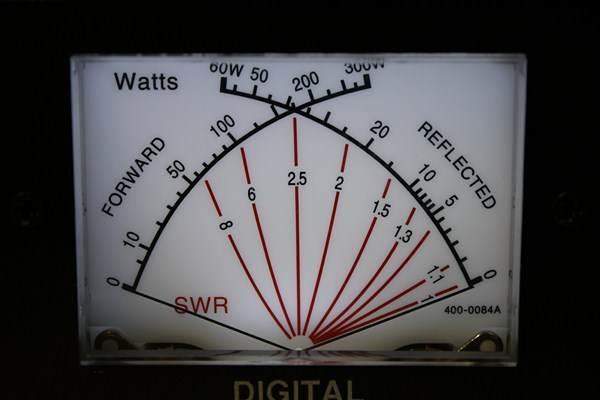
This is a common dual-needle meter. It displays output power, reflected power, and SWR. As power increases, the needle on the left will rise. Where the 2 needles intersect will show the SWR. Follow the red lines to get the exact reading.
A dip is when you are adjusting the dials, and the meter goes to the lowest point or ‘dip’.
Automatic Antenna Tuners
Manual antenna tuners are cheap and easy to use, but it is also possible to automate this process. Automatic antenna tuners are common because they are easy to use. Auto tuners are usually more expensive than a manual tuner.
Internal Antenna Tuners
Most modern radios have a built-in antenna tuner. These tuners are not as powerful as external ones, but may be used if the antenna is close to good SWR already. They can tune antennas with an SWR better than 3:1.
Just as a note for later, YOU SHOULD NOT USE YOUR INTERNAL TUNER AND AN EXTERNAL TUNER AT THE SAME TIME!
Here is a fantastic video on manual tuners and SWR meters/bridges. (Manual tuner demo at 5:50)